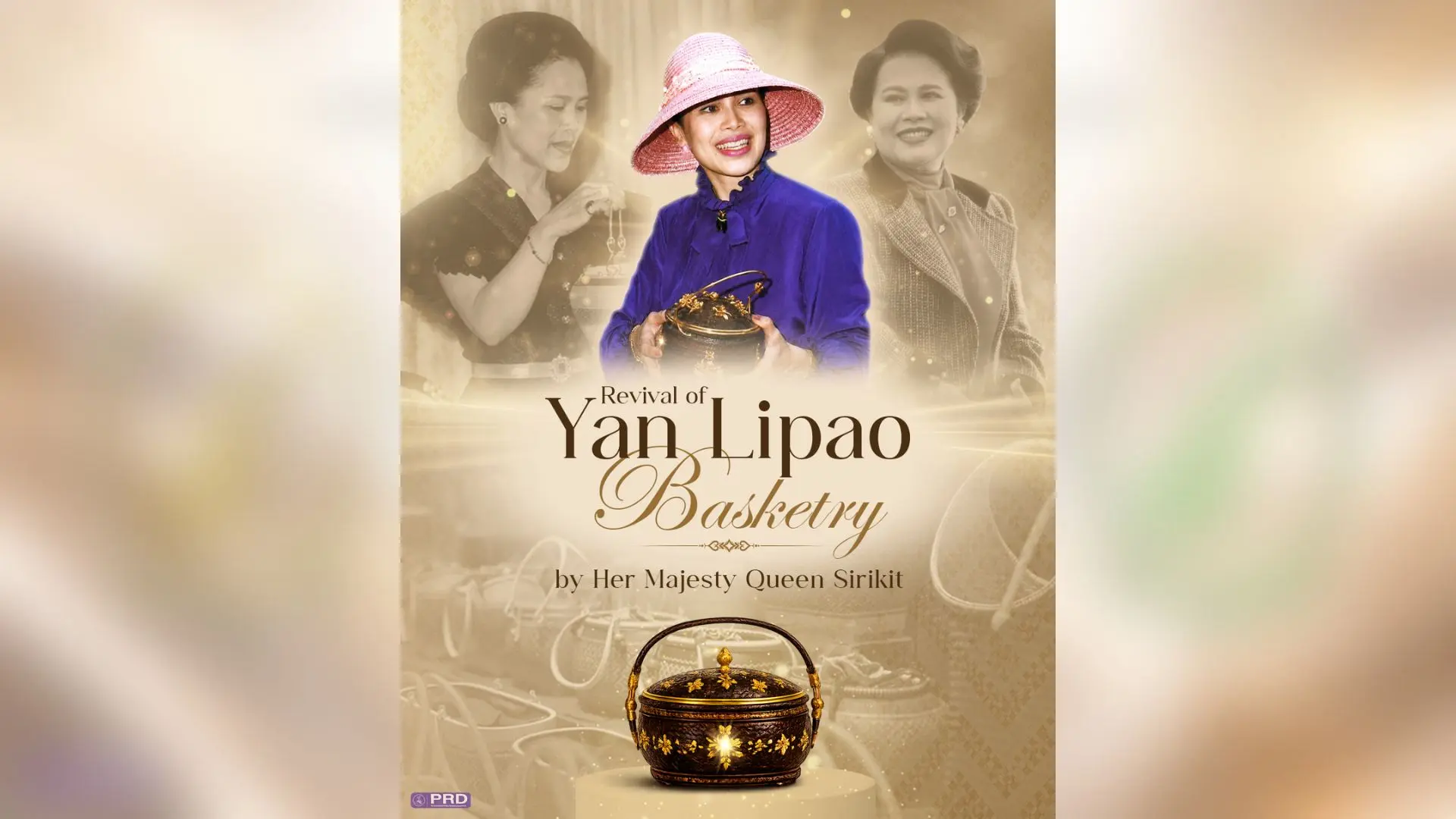
Royal Crematorium Reflects Recognition of Queen Mother as “Mother of the Land”
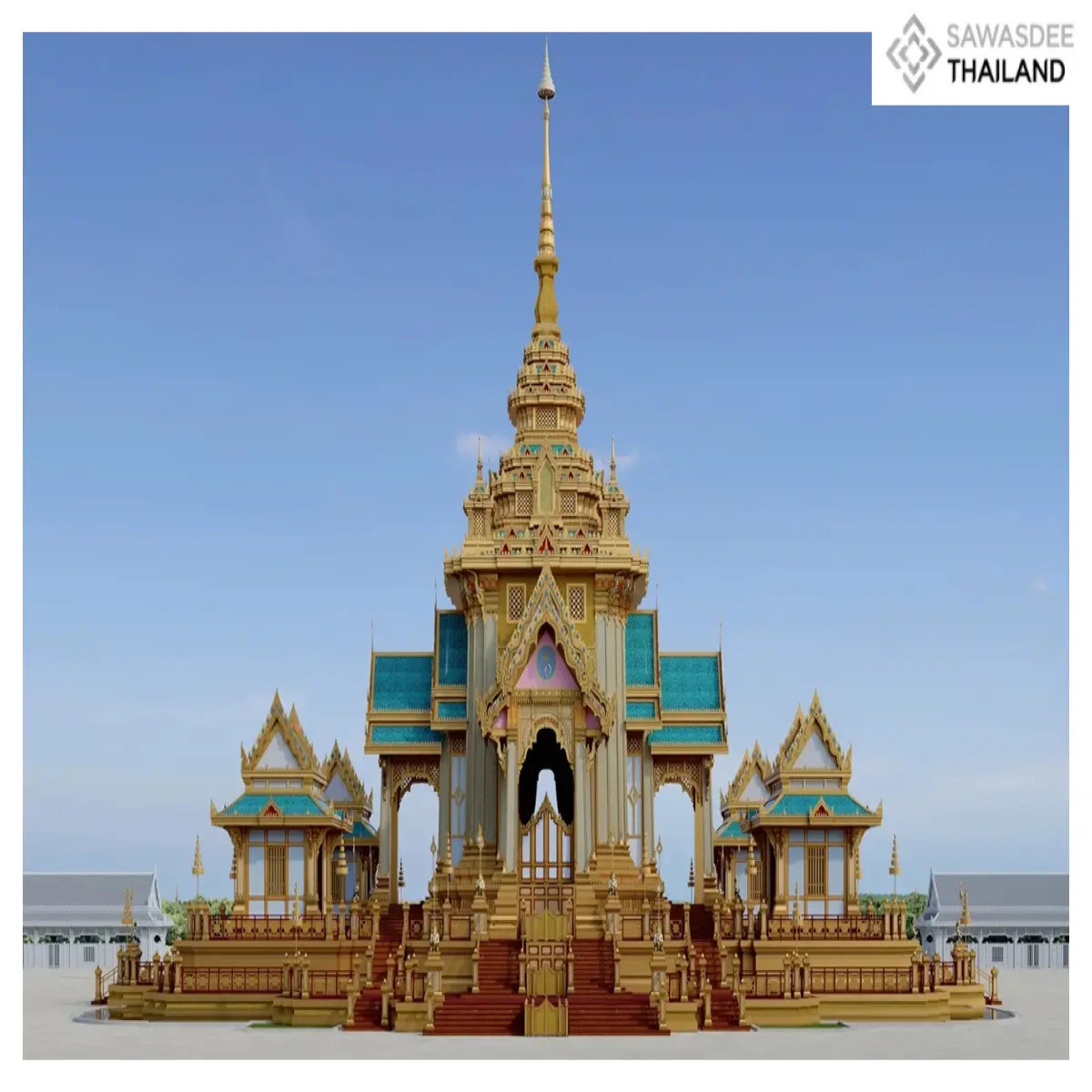
The design of the Royal Crematorium for Her Majesty the Queen Mother follows ancient traditions, reflecting the recognition of Her Majesty as “Mother of the Land” and her lifelong dedication to the Thai people.
On 26 October 2025, Thailand returned to a sombre national mood of mourning, as the royal mortal remains of Her Majesty Queen Sirikit The Queen Mother were ceremonially transferred from Chulalongkorn Memorial Hospital to Dusit Maha Prasat Throne Hall at the Grand Palace in Bangkok — a symbolic farewell, as the nation’s “Mother of the Land” was sent to heaven with the highest honours.
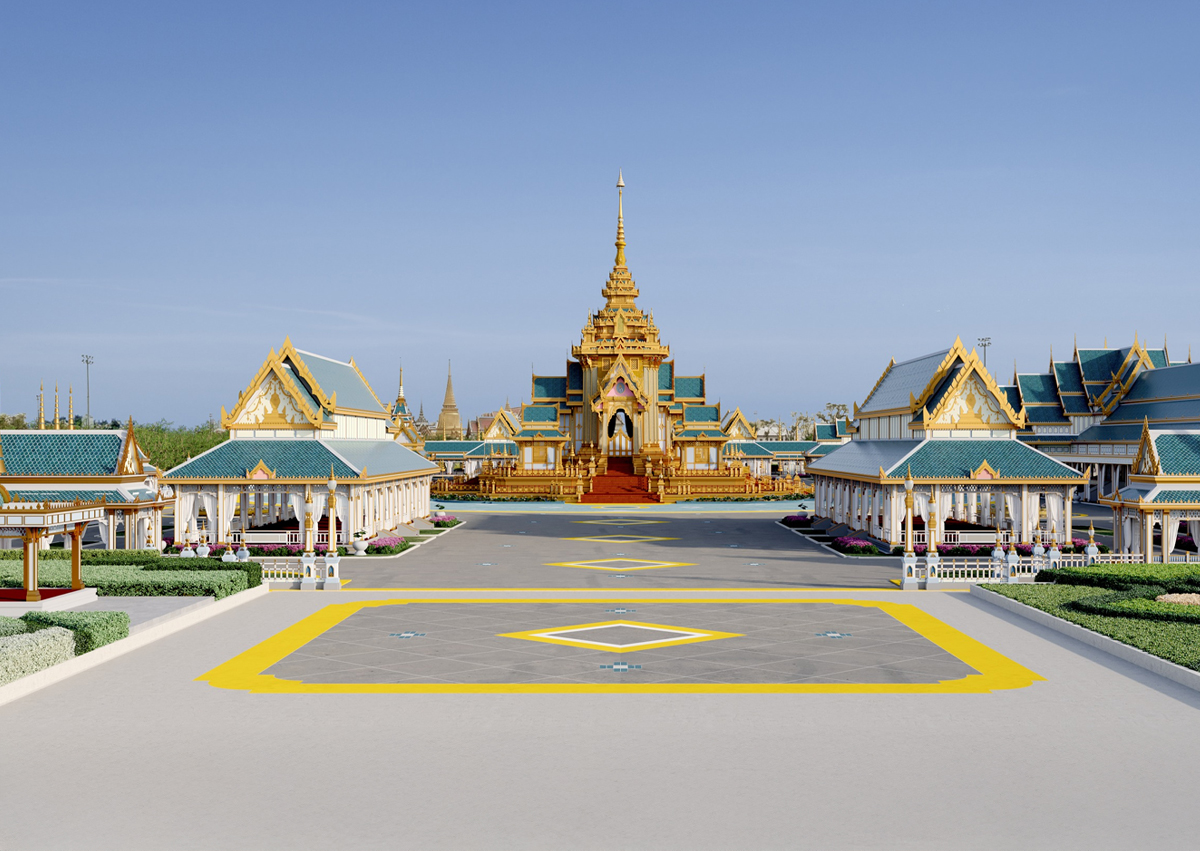
Preparations for the Royal Cremation Ceremony began with dignity and restraint. The Fine Arts Department is the lead agency responsible for designing and constructing the Royal Crematorium, along with its accompanying structures.
Design rooted in ancient royal traditions
For the design of the Royal Crematorium, the Fine Arts Department has adhered strictly to ancient royal traditions while ensuring outstanding artistic beauty.
The concept is intended to reflect the late Queen Mother’s royal conduct and great compassion towards the Thai people.
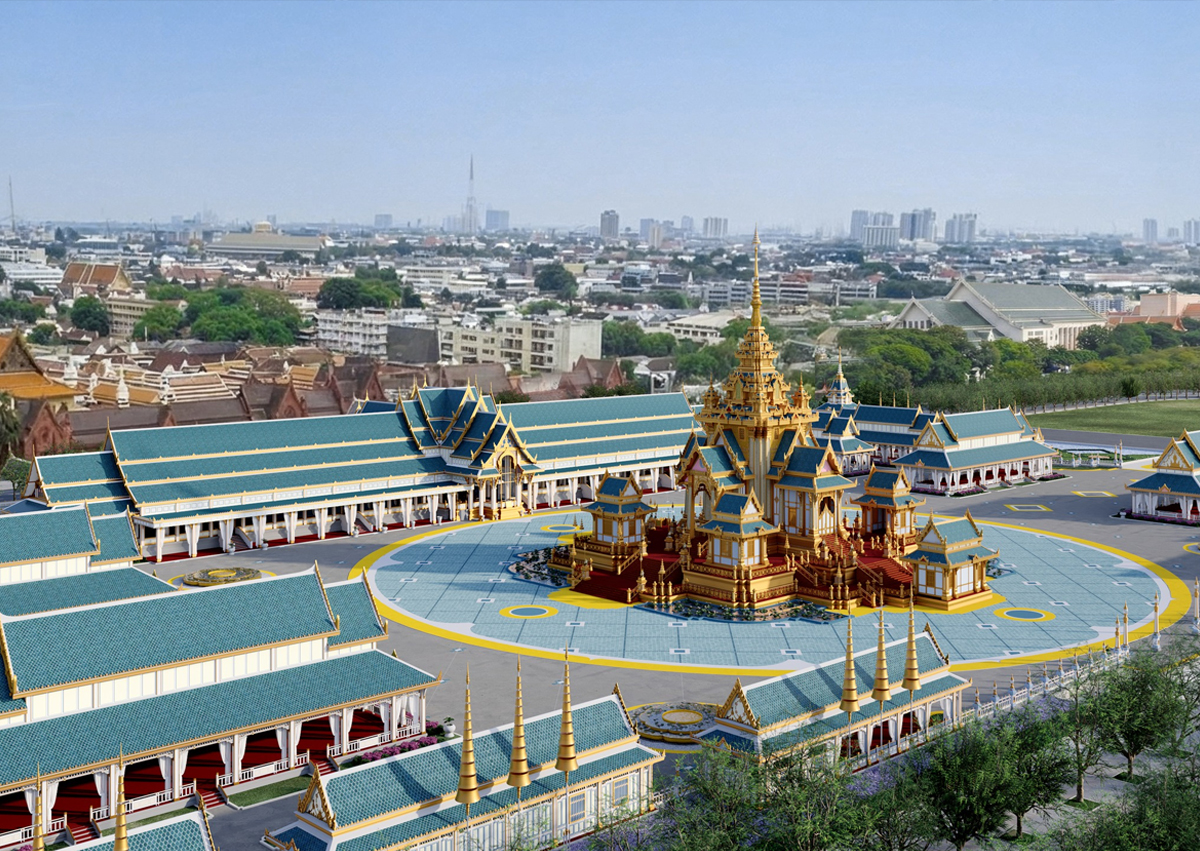
The Royal Crematorium built for this ceremony features a finial in the form of a transformed crown, modelled on royal headwear.
The structure incorporates a seven-tiered, multi-layered roof, comparable in rank to Maha Prasat halls within the Grand Palace.
The spire finial is designed as a four-faced Brahma, symbolising the journey to the Brahma realm after passing and evoking the royal epithet “Mother of the Land” — in recognition of the royal duties Her Majesty performed as a mother caring for and protecting her children.
It may therefore be said that Her Majesty was like a Brahma to her children — the Thai people.
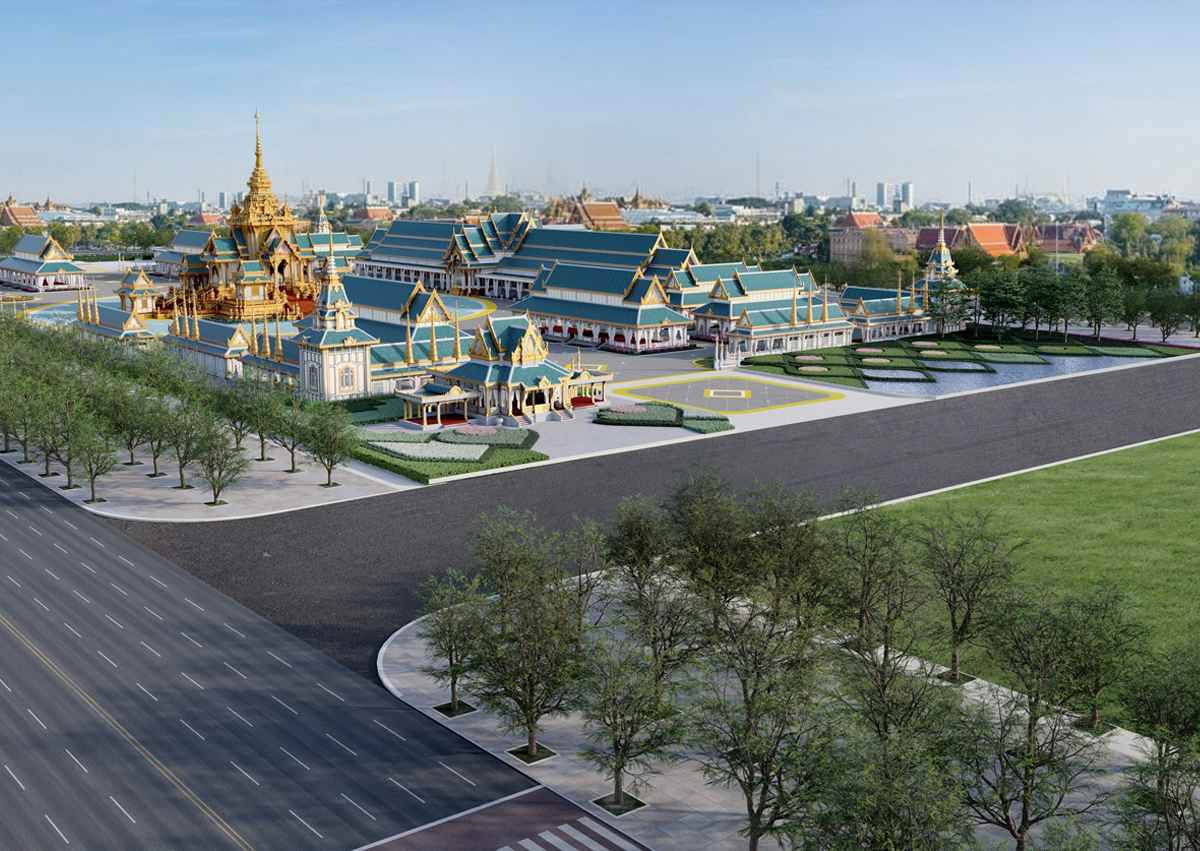
The very top of the Royal Crematorium is adorned with the Nine-Tiered Great White Umbrella of State (Noppadon Maha Sawetachat), signifying the highest royal status.
The Royal Crematorium follows a square plan, in a palace-like pavilion form, with projecting porches on all four sides. It stands above a two-tiered base platform decorated with celestial figures, symbolising the ascent to heaven.
The roof is finished in a muted blue, alternating with an iridescent beetle-wing hue. Each gable is decorated with the Queen Mother’s royal initials in Thai against a blue background — the colour associated with Friday, Her Majesty’s birthday — set against pink, the auspicious colour of her birthday.
The gable archways are constructed in a style inspired by the silhouette of a crown and the necklace Her Majesty wore during her lifetime.
Decorative motifs used throughout the Royal Crematorium draw inspiration from various plants associated with her name, “Sirikit.” The fire screens are embroidered by artisans at the Queen Sirikit institute, founded through the royal benevolence of the Queen Mother.
The surrounding landscape is arranged according to the concept of a cosmic universe, featuring circular pools and ornamentation with creatures from Himmaphan Forest and characters from The Story of Ramakian, reflecting Her Majesty’s role in preserving the Khon masked dance drama.
Additional structures accompanying the Royal Crematorium include the Royal Merit-Making Pavilion, the Government Officials’ Pavilions, the Pavilions Describing the Boundary of the Ceremonial Site, and the Pavilions for Monks, Royal Doctors, and Court Officials.
The Ministry of Natural Resources and Environment has already delivered fragrant sandalwood to the Office of Traditional Arts, under the Fine Arts Department, for the construction of the sandalwood royal coffin and the sandalwood royal urn.
Work is now under way to enlarge patterns and develop decorative designs for the next stages. The urn for the royal remains is made of enamelled gold, inlaid with gemstones, in an octagonal form with a crown-shaped finial, following an ancient inherited design.
In addition, a royal command has been issued for the production of merit-making items for presentation to royal temples and religious sites. These include altar table sets, book cabinets, and worktables with bookshelves and chairs— produced in four designs — as well as lamps.
Royal guidance and approval have already been bestowed, and production has been completed.
Fine Arts Department readies full honours for a historic farewell
Mr. Phanombut Chantarachot, Director-General of the Fine Arts Department, said that all personnel across every unit have been fully prepared to ensure that each step proceeds in accordance with ancient royal traditions and the highest Thai artistic standards.
He said that lessons and experience from the Royal Cremation of His Majesty King Bhumibol Adulyadej the Great would be applied to this design, ensuring that every element befits the utmost honour to the Queen Mother.
Alongside construction, restoration work is also being carried out on the royal chariots and royal palanquins to be used in the ceremony. The department is also preparing commemorative archival records to document events systematically from the moment the Bureau of the Royal Household issued the official announcement of the passing.
Civil servants and artisans of the Fine Arts Department — both current staff and retired masters who served in past royal ceremonies — have united once again to help create a new historic work for the nation.
Each royal cremation ceremony is not only a “national undertaking”, but also a “work of the heart” — bringing together art, tradition, and faith in every line and detail of the royal crematorium.
And this year, Thailand is entering another historic moment to bid farewell to the Queen Mother with boundless loyalty and reverence, sending her to heaven with the highest honour.