Thailand Advances Sustainable Sugar Industry with First-Ever “Sugar Ecolabel”
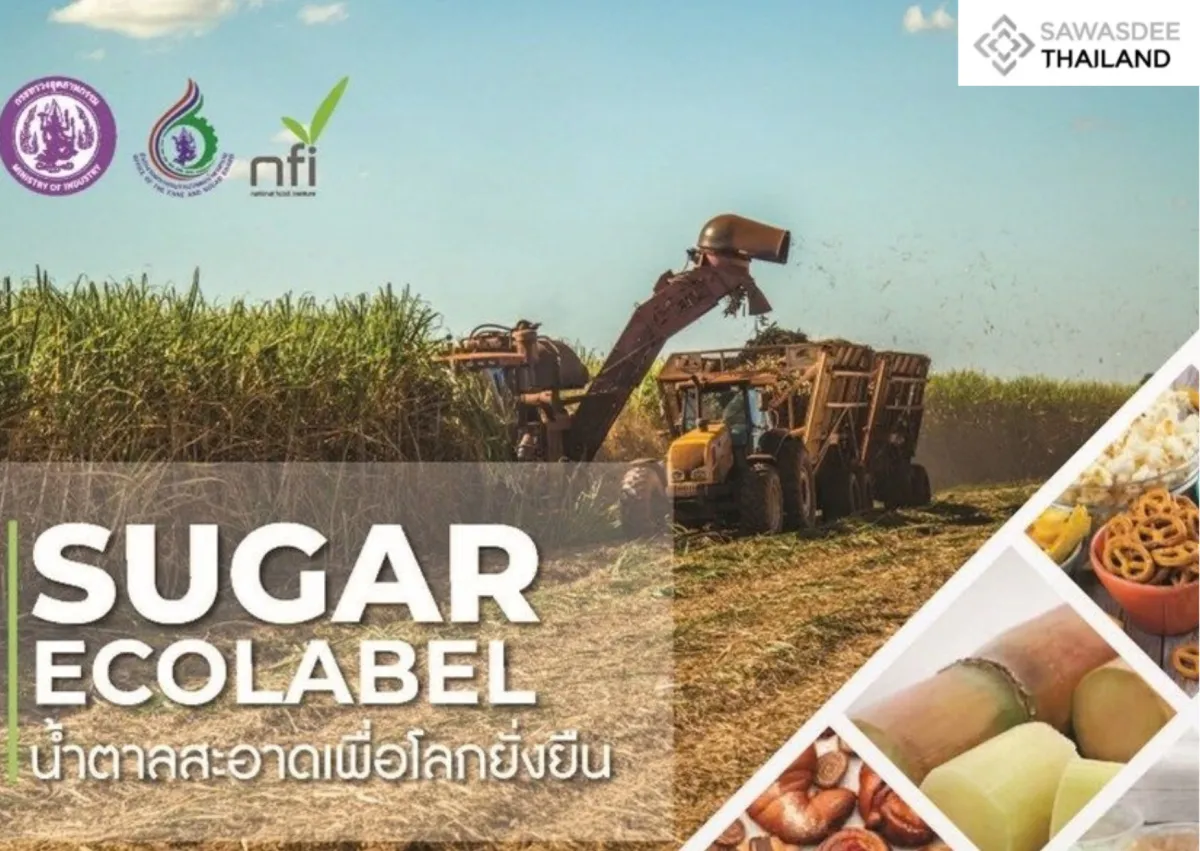
Thailand is moving to upgrade its sugarcane and sugar industry with concrete environmental standards following the launch of the country’s first “Sugar Ecolabel,” developed by the Office of the Cane and Sugar Board (OCSB) in collaboration with the National Food Institute. The initiative aims to reduce environmental impacts across the entire supply chain, with a particular focus on mitigating PM2.5 pollution and supporting long-term sustainable industrial development.
According to OCSB Secretary-General Bainoi Suwanchatri (นายใบน้อย สุวรรณชาตรี), the Sugar Ecolabel establishes a systematic framework for environmental assessment and certification for the sugar industry. It links policy objectives with on-the-ground implementation by integrating technology, market mechanisms, and regulatory support into farming, processing, and distribution stages.
The ecolabel framework incorporates monitoring, reporting, and verification systems, traceability of sugarcane and sugar products, sustainable agricultural practices, and research and development initiatives (Monitoring, Reporting and Verification: MRV). It also promotes the use of agricultural machinery and fresh-cut harvesting to reduce open burning, a major source of PM2.5 pollution in agricultural areas.
Green Public Procurement and no-burn supply agreements are also promoted to ensure measurable and traceable environmental outcomes. The Sugar Ecolabel is expected to play a key role in aligning Thailand’s sugar industry with international sustainability standards, strengthening environmental responsibility throughout the supply chain, and supporting the country’s transition toward greener industrial growth.