Thailand Shifts to Low-Carbon as El Niño Threatens Extended Drought
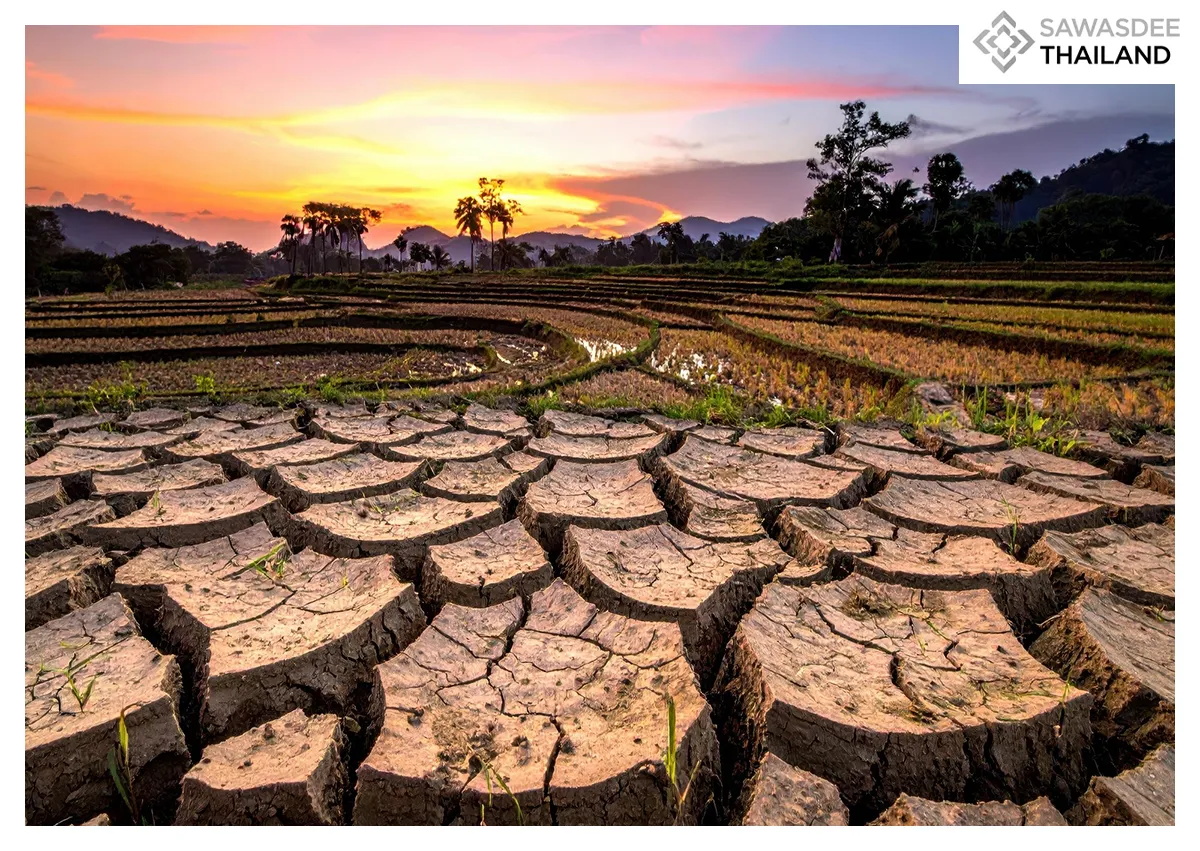
El Niño is expected to return in 2026, putting Thailand at risk of prolonged drought and extreme heat, directly impacting the water-dependent agricultural sector.
Over the past decade, the world has experienced more frequent heatwaves and extreme weather events. The Greenhouse Gas Management Organization (TGO) reports that several climate research institutes have confirmed that global surface temperatures have risen. This increase is primarily due to the accumulation of greenhouse gases and natural climate fluctuations, such as the El Niño phenomenon.
El Niño significantly affects temperatures, rainfall patterns, and overall climate variability, impacting various regions, including Thailand. This phenomenon is expected to contribute to further shifts in weather patterns, exacerbating the risks of extreme conditions like heatwaves and droughts.
Climate models predict that El Niño will return in 2026, likely causing sea surface temperatures in the tropical eastern Pacific Ocean to exceed average levels, which will lead to higher surface temperatures compared to the previous year. This could result in longer periods of drought.
Such a scenario signals that Thailand may face extreme heat, prolonged dry spells, and erratic weather, directly affecting water demand and increasing the risks for agriculture, which heavily relies on water. Key crops such as rice, sugarcane, beans, and cotton, which are both consumed domestically and exported, are particularly vulnerable.
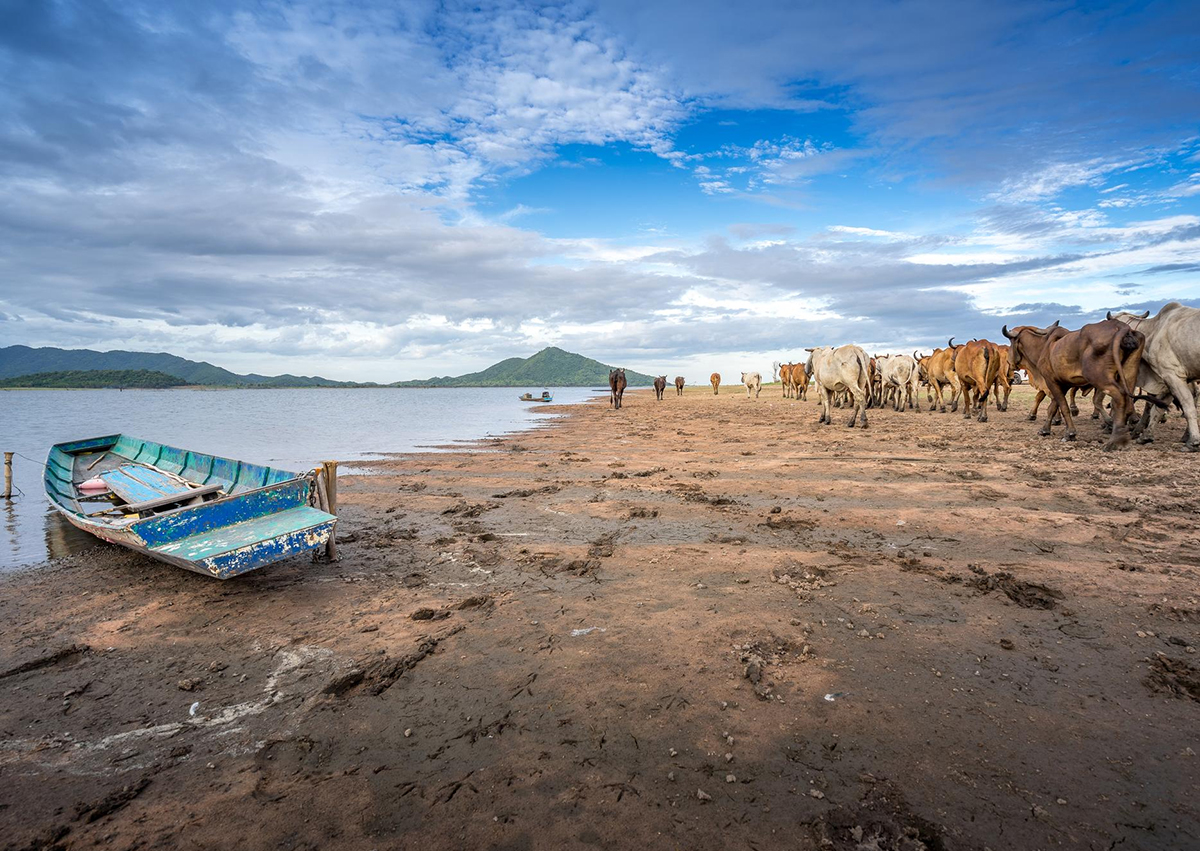
Challenges of Traditional Farming Systems
This situation presents challenges for traditional farming systems, including the typical rice-growing method in Thailand, which relies on keeping fields flooded throughout the growing season to control weeds and create favourable conditions for crop growth.
However, this practice contributes to methane emissions because flooded soils create anaerobic conditions that stimulate methane production by soil microorganisms, adding to overall greenhouse gas emissions. Methane has a global warming potential (GWP) 28 times higher than carbon dioxide and can remain in the atmosphere for up to 12 years.
Agriculture is therefore a significant contributor to Thailand’s emissions profile, alongside the energy and industrial sectors. According to the Pollution Control Department, in 2023 the energy sector accounted for 69.06% of Thailand’s total greenhouse gas emissions, followed by agriculture (15.69%), industrial processes and product use (10.77%), and waste (4.48%).
Within agriculture, rice cultivation is estimated to generate around 50–55% of sectoral emissions—driven largely by methane from flooded paddies, with additional emissions of nitrous oxide linked to nitrogen fertiliser use.
Traditional rice farming also consumes large amounts of water, especially during the dry season, exacerbating water shortages during extended dry spells influenced by El Niño.
Low-Carbon Rice: A Lifeline for Thai Agriculture
Poonpong Naiyanapakorn, Director of the Trade Policy and Strategy Office (TPSO), highlighted that Thailand’s agricultural production and trade are currently facing environmental challenges, as consumers increasingly demand products that help reduce greenhouse gas emissions and are environmentally friendly.
Rice, a major export commodity, plays a significant role in Thailand's economy, with the country being one of the world’s leading rice exporters. Given this, it is essential to accelerate adaptation and improve production methods to take advantage of the growing market for low-carbon or climate-friendly rice, he added.
He further pointed out that several countries, including Thailand, are beginning to encourage low-carbon rice farming as a strategy to combat climate change. This shift not only aligns with the demands of environmentally conscious consumers but also allows rice grown using these sustainable methods to fetch higher prices in the market.
This method is a collaborative effort between the Ministry of Agriculture and Cooperatives and the German Corporation for International Cooperation (GIZ), specifically designed for rice farming in Thailand’s central plains. The approach includes several key practices:
- Laser leveling of rice fields to ensure uniformity and maximise water efficiency.
- Alternate Wetting and Drying (AWD), where water is intermittently added and drained, with levels monitored through a water level tube installed in the field.
- Fertiliser application based on soil analysis to reduce waste and minimise costs.
- Rice straw burial and composting instead of burning it, which helps reduce air pollution and greenhouse gas emissions.
- Integrated Pest Management (IPM), which combines various pest control methods and encourages the use of modern tools, such as temperature, rainfall, and humidity monitors, to improve crop management.
These methods enhance production efficiency while reducing global warming caused by rice farming, ensuring sustainable development for Thailand’s agricultural future. Low-carbon rice presents a significant opportunity for Thailand to remain competitive in the global market amid the growing demand for sustainable products.

Boosting Low-Carbon Agriculture and Carbon Credits
To support systematic greenhouse gas reduction, the TGO has developed the Premium Thailand Voluntary Emission Reduction (Premium T-VER) programme.
This initiative enables farmers to participate in the Premium T-VER programme for carbon credit certification, expanding their activities while adhering to best agricultural practices in rice cultivation through the T-VER-P-METH-13-08 methodology.
This methodology allows for the inclusion of multiple areas or land types that align with the land-use zone and avoid areas prone to landslides. Projects must be located in irrigated rice fields or areas with independent water sources, with farmers required to use equipment that controls water intake and drainage.
This approach ensures reliable measurement, reporting, and verification of greenhouse gas reductions and emissions sequestration. Once certified, carbon credits can be sold on international markets, with prices ranging from US$17 to US$25 per tonne of CO₂ equivalent.
Thailand Accelerates Shift to Low-Carbon
Thailand has endorsed the Johannesburg Declaration on Sustainable Development (2002) and the Manila Declaration on Green Industry (2009), and has ratified the Paris Agreement, adopted at COP21 in Paris in 2015.
This agreement, under the United Nations Framework Convention on Climate Change (UNFCCC), sets a global goal to limit the increase in average global temperature to below 2°C compared to pre-industrial levels, with an aim to keep it below 1.5°C to reduce the risks associated with climate change.
Thailand’s Green Industry project was initiated after the UN Industrial Development Organization (UNIDO) Green Industry Conference and aims to integrate environmental considerations into industrial practices. The Ministry of Industry has outlined two key approaches for implementing this initiative:
- Developing a practical, step-by-step model of green industry that is tailored to Thailand’s specific needs under two main principles: continuous improvement and sustainable development.
- Integrating all environmental projects within the Ministry of Industry under the Green Industry initiative.
In late 2010, the Ministry of Industry began serious implementation of the Green Industry project by signing memorandums of understanding (MOUs) with various agencies to promote environmentally and socially responsible industry practices. This initiative has helped enhance Thailand’s image, boosting public trust and creating a foundation for developing a green economy.
The Ministry of Industry has partnered with various institutions, particularly provincial industry offices and industrial estates, to encourage businesses nationwide to adopt environmentally friendly practices.
The Green Industry programme consists of five levels:
- Level 1: Green Commitment – The expression of commitment through policies, goals, and plans to reduce environmental impact, communicated throughout the organisation.
- Level 2: Green Activity – The implementation of activities based on set goals and plans to tangibly reduce environmental impacts.
- Level 3: Green System – The systematic management of the environment with continuous assessment and improvement, including achieving environmentally recognised awards or certifications.
- Level 4: Green Culture – The cultivation of an organisation-wide awareness and commitment to preserving the environment, making it part of the company culture.
- Level 5: Green Network – Expanding the green industry practices beyond the organisation to the entire supply chain, supporting partners and stakeholders in becoming part of the green industry.
In conclusion, the return of El Niño in 2026 poses significant risks to Thailand’s agriculture, especially rice farming. However, the country is advancing towards low-carbon agriculture through the Premium T-VER programme, promoting sustainable farming practices and carbon credit certification.
By adopting efficient water and soil management, Thailand is reducing its environmental impact while positioning itself as a leader in sustainable agriculture, aligning with its broader commitment to combating climate change.