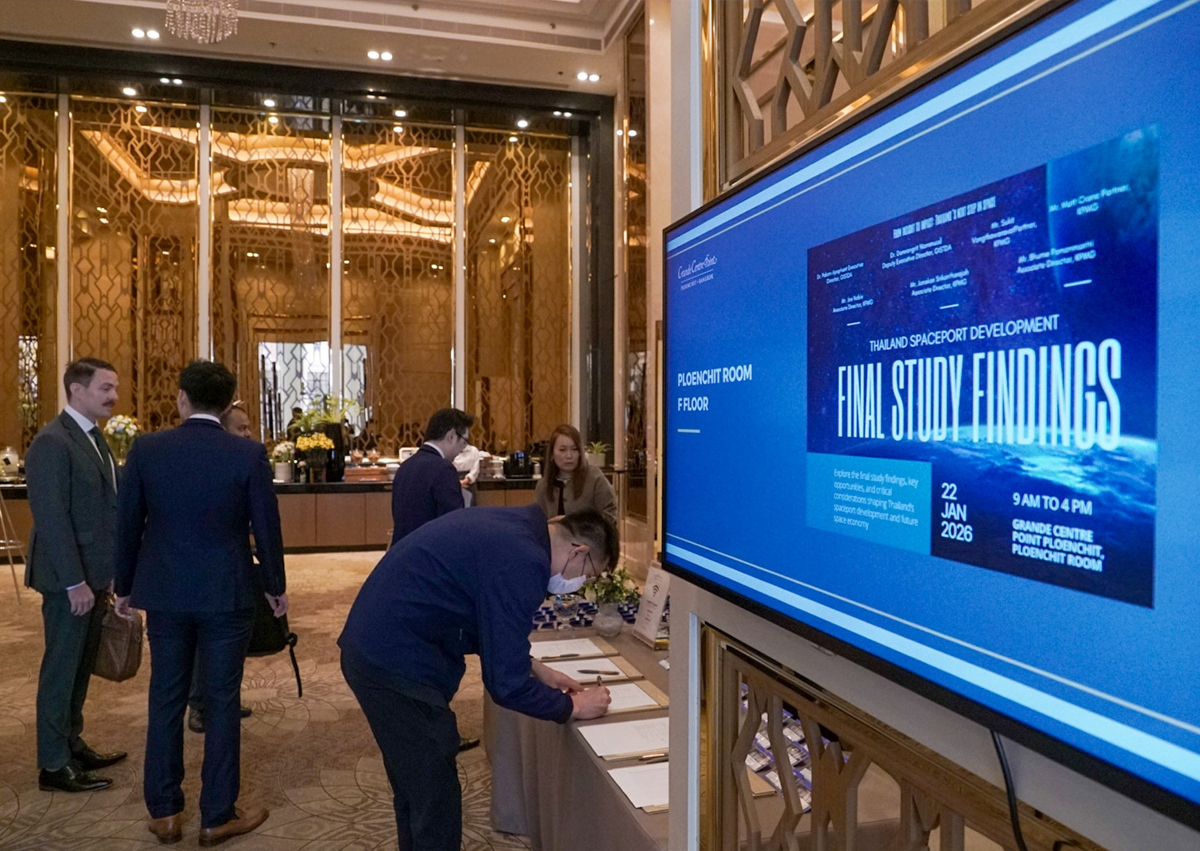
Thailand to Launch Spaceport Project with Strong Economic and Social Returns
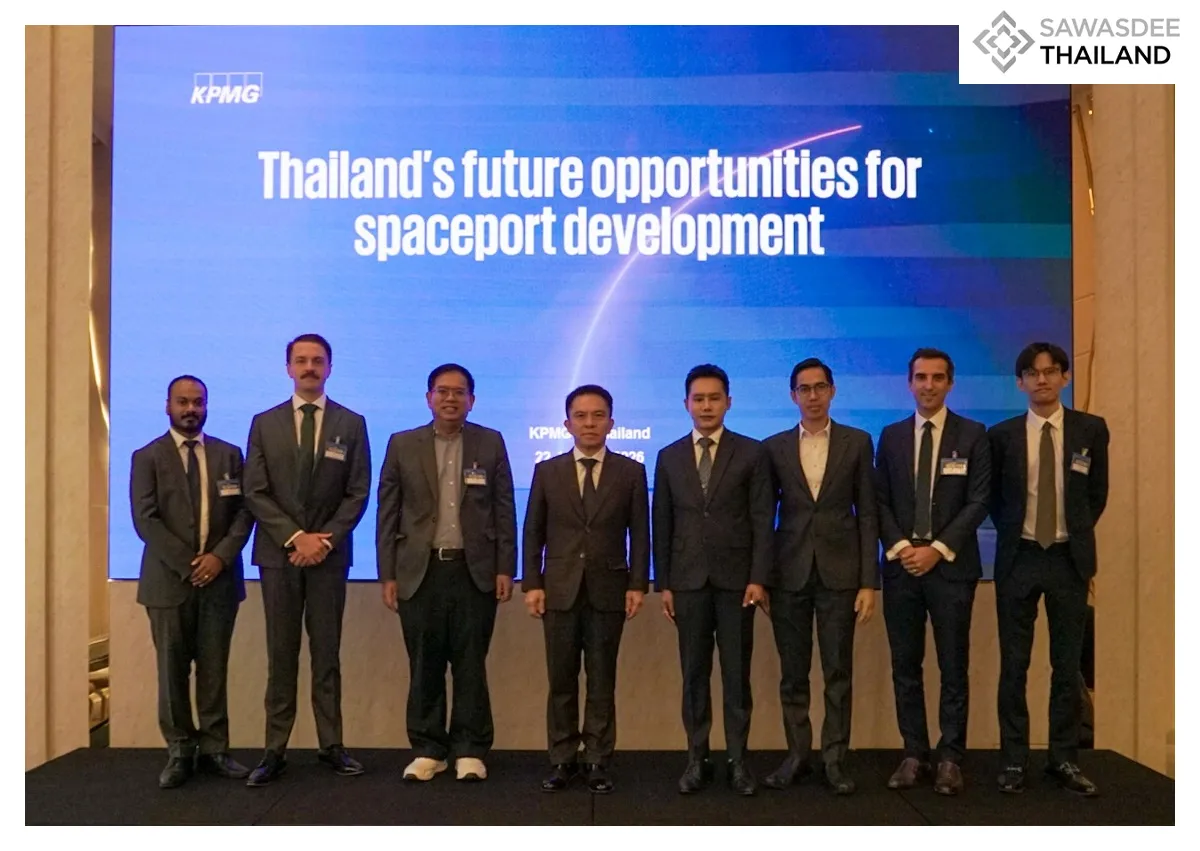
Thailand's spaceport project shows promising economic value with a positive NPV and an impressive 1.79 social return on investment (SROI), positioning the country as a future space hub.
The latest study report reveals that Thailand can initiate its own spaceport project, showcasing its potential through a positive economic net present value (NPV) and a social return on investment (SROI) of 1.79 times.
The report, prepared by the Geo-Informatics and Space Technology Development Agency (GISTDA) in collaboration with KPMG Phoomchai Business Advisory (KPMG), outlines a roadmap beginning with suborbital operations to lay the groundwork for infrastructure and personnel, before progressing to a fully-fledged space hub in the future.
This study marks a significant milestone in Thailand's preparation to enter the "new space economy," emphasizing that space infrastructure development is not always out of reach or excessively expensive.
The findings indicate that Thailand can take its first steps with suborbital missions in areas with suitable physical and geographical characteristics. The project evaluates engineering, economic, and social impacts to find the best-fit model for Thailand.
The results suggest that strategic locations in the Eastern Economic Corridor (EEC) or southern regions could become gateways to space.
Site Selection Analysis
The study evaluated three potential sites based on engineering factors, safety, flight routes, and investment costs.
The comparison showed that the first site, "Ko Juang–Ko Jan, Chonburi," is the most suitable, with the lowest initial investment cost of 376 million baht. This site benefits from being government-owned land and having a geography conducive to rocket launches, reducing the costs of land acquisition and area modification.
The second site, "U-Tapao Airport, Rayong," although having aviation infrastructure in place, would require an additional 828 million baht to meet space safety standards and ensure no disruption to commercial flights.
The final site, "Laem Son On, Songkhla," while strategically located near the equator, faces significant cost constraints of over 4 billion baht, mainly due to the need to purchase private land, making it less cost-effective for initial investment.
Financial and Economic Analysis
The report divides the returns into two main components to reflect the real impact of public sector investment.
The economic NPV for Ko Juang–Ko Jan is the only site with a positive figure, indicating that the combined direct and indirect benefits, such as high-tech industry employment, supply chain growth, and space tourism, will yield a higher return than the initial investment.
The financial NPV is negative in the early stages, reflecting the upfront capital-intensive nature of large-scale infrastructure projects aimed at generating long-term economic returns.
A key highlight of the report is the analysis of the SROI, which reveals that the spaceport development at Ko Juang–Ko Jan will deliver a 1.79-fold return for society.
For every 1 baht invested, around 1.79 baht of social value will be generated. This value will come from various factors, including human capital development through training youth and professionals in STEM fields.
Additionally, the project will foster technology transfer, enabling knowledge exchange between foreign experts and Thai engineers. It will also support community sustainability by minimizing the impact on surrounding areas while creating new income opportunities.
Phased Development Approach
The report recommends a phased approach to development, starting with suborbital rocket testing and launch capabilities in the first two to five years. This lower-risk technology will cost less than orbital missions, providing essential operational experience, airspace management, safety standard testing, and training for Thai engineers and researchers.
Although the Thailand spaceport project faces challenges, including technological complexities, regulatory hurdles, and geographical constraints, the study confirms that "the feasibility is real and worthwhile."
This investment will not just build a rocket launch site; it will position Thailand on the global space map, signaling its readiness to be a player in the space industry. The decision to proceed with this project is a strategic step that will shape the country’s future economy and technological landscape for the next decade.