Wat Metta Dharmabodhiyan (วัดเมตตาโพธิญาณ): A Chinese Mahayana Landmark Enhancing Faith-Based Tourism in Kanchanaburi
The Tourism Authority of Thailand (TAT), Kanchanaburi Office, is promoting Wat Metta Dharmabodhiyan in Nong Ya (หนองหญ้า) Subdistrict, Mueang (เมือง) District, as a key destination for faith-based and cultural tourism, highlighting its distinctive Chinese architectural heritage and tranquil mountain setting.
During a recent site visit and discussion with the Director of the TAT Kanchanaburi Office,Miss Sareeya Boonmak (สรียา บุญมาก), it was noted that Wat Metta Dharmabodhiyan stands out as one of the province’s most remarkable Mahayana Chinese Buddhist temples. Surrounded by lush hills and a serene atmosphere, the temple offers visitors a meaningful experience that combines spiritual devotion, cultural learning, and relaxation.
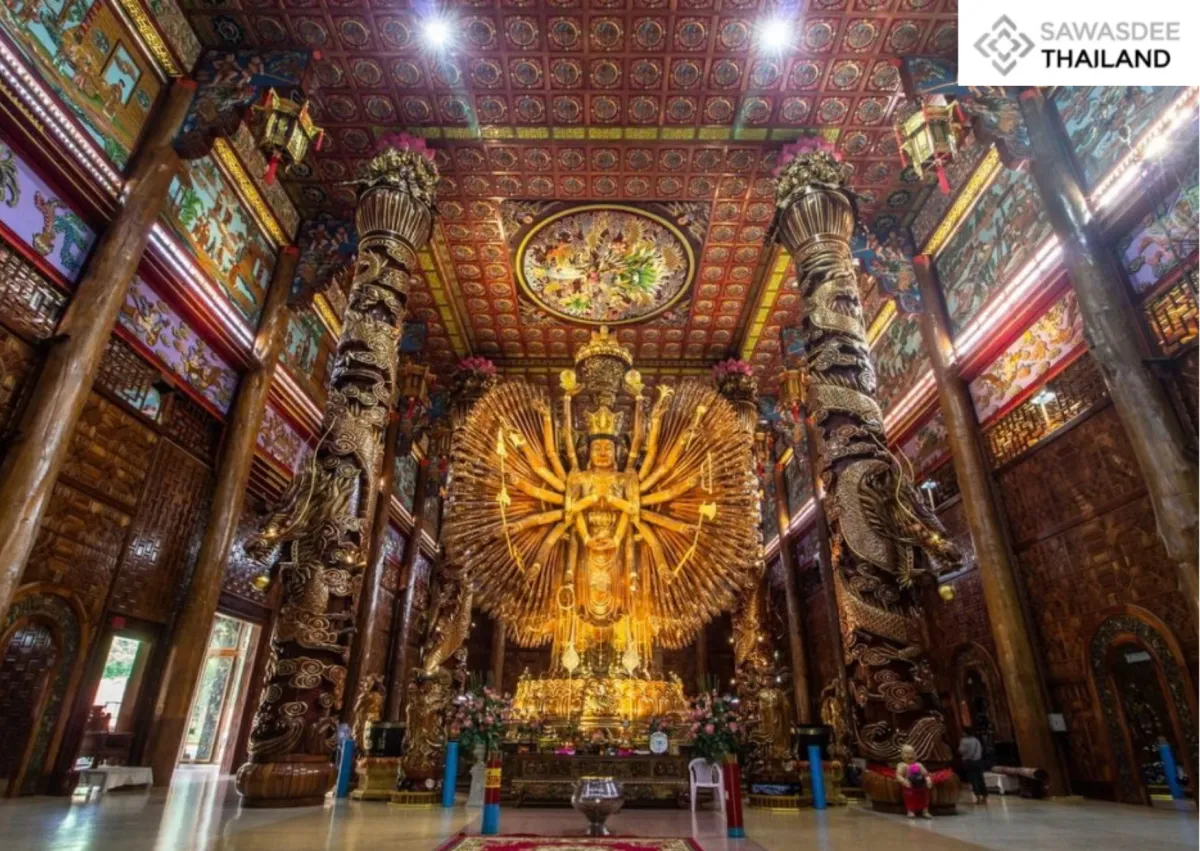
The temple’s most striking feature is a 12-metre-tall wooden statue of the Thousand-Armed Avalokitesvara (Guan Yin Bodhisattva), meticulously carved from a single piece of wood. The statue is considered a masterpiece of religious art and serves as the spiritual focal point of the temple. Surrounding the main statue are more than 100 wooden carvings of Guan Yin in different manifestations, crafted from fragrant wood, reflecting the depth of devotion and the refined craftsmanship of traditional Chinese artisans.
Additional highlights include massive wooden pillars intricately carved with dragon motifs and extensive woodcarving details throughout the temple complex, all executed in classic Chinese architectural style. According to TAT Kanchanaburi, these elements make the temple not only a place of worship but also a living cultural attraction.
The Director of the TAT Kanchanaburi Office explained that many visitors come to Wat Metta Dharmabodhiyan to perform rituals related to dispelling misfortune, resolving “bad luck years,” and seeking blessings from Tai Sui deities representing the 60 Chinese zodiac signs. The temple also regularly provides vegetarian meals at its vegetarian hall, reinforcing its role as a welcoming spiritual centre for the public.
TAT views Wat Metta Dharmabodhiyan as a high-potential attraction that seamlessly integrates faith, art, and community values. The temple is expected to play an increasingly important role in diversifying Kanchanaburi’s tourism offerings and promoting sustainable, high-quality travel experiences rooted in cultural identity.